
Who Hardened Pharaoh’s Heart?
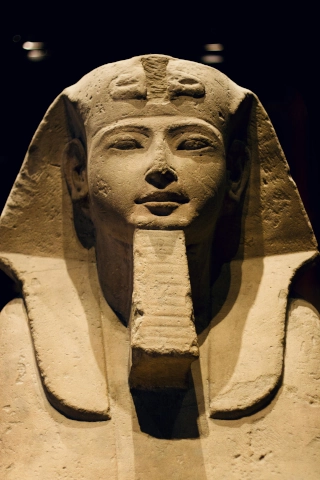
What began as a normal day in Pharaoh’s throne room quickly morphed into a confrontation between the ruler, sporting his royal finery, and Moses, the character who had lived with sheep in the desert for the previous forty years. Moses delivered a message from Jehovah, and as Scripture records, Pharaoh’s hard heart prevented him from embracing the truth that Jehovah is the one and only God. The king spurned many chances to repent and comply with God’s directions. Pharaoh held tightly to his pride up to and including the moment that his hard heart pounded its last beat. In common vernacular, he fooled around and found out that a hard heart can be a fatal condition. So, who hardened Pharaoh’s heart? God? Or Pharaoh himself?
What is a hard heart?
The terms “hard heart” and “hardened heart” describe one who refuses to change his standpoint despite mounting evidence that his position is in error. His determination to hold to his own interpretation then cements a rigid belief system that guides his decision making and flavors his life choices.
Was Pharaoh doomed from before birth?
Paul turned the spotlight on Pharaoh as an example of the sovereignty of God’s choices, choices beyond our ability to accurately dissect and comprehend. God chooses and promotes one while another is left behind in a less visible position. Was Pharaoh predestined to doom before his heart ever took its first beat? Here are Paul’s words in Romans followed by God’s message to Pharaoh as recorded in the Old Testament book of Exodus.
For the Scripture says to Pharaoh, “FOR THIS VERY PURPOSE I RAISED YOU UP, TO DEMONSTRATE MY POWER IN YOU, AND THAT MY NAME MIGHT BE PROCLAIMED THROUGHOUT THE WHOLE EARTH.” Romans 9:17 NASB
“But, indeed, for this reason I have allowed you to remain, in order to show you My power and in order to proclaim My name through all the earth. Exodus 9:16 NASB
Moses landed a tough assignment.
Imagine yourself in the assignment God gave to Moses.
- Return to the scene of the capital crime you committed forty years ago.
- Reconnect with your people, the Hebrews.
- Promise them deliverance from slavery.
- Gain an audience with the current Pharaoh.
- Demand that Pharaoh release the Hebrews, all of them, to serve Jehovah, the God of the Hebrews.
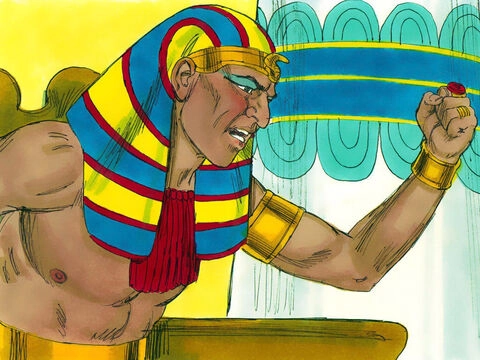
The meeting did not proceed as Moses had planned. Pharaoh flatly refused the request. First, the Hebrews were the slave labor force building his public works projects. Second, Pharaoh had an army of gods he served, and Jehovah’s name did not appear on that list.
“[Pharaoh] had confidence in the deities of Egypt. In ancient times the power of a nation was thought to reflect the potency of its gods…Certainly, the young pharaoh would have nothing but contempt for the God of slaves.[1]”
Why fear and respect a God who had allowed His people to serve as slaves to a more powerful nation? “I do not know this God of whom you speak. Besides, if His people are my slaves, how can I take Him seriously? His power is nothing. Get back to work!”
And afterward Moses and Aaron came and said to Pharaoh, “Thus says the LORD, the God of Israel, ‘Let My people go that they may celebrate a feast to Me in the wilderness.'” But Pharaoh said, “Who is the LORD that I should obey His voice to let Israel go? I do not know the LORD, and besides, I will not let Israel go.” Exodus 5:1-3 NASB
Was Pharaoh’s question an honest one?
F. B. Meyer suggests in his book, Moses, The Servant of God, that Pharaoh’s question might have been an honest inquiry. “Who is the LORD that I should obey His voice to let Israel go?” Jehovah was a God unknown to Pharaoh. I’ve pondered that idea much since I first read Meyer’s words, and as I meditated on the passage it occurred to me that God, in His mercy and grace, set about to introduce Himself to Pharaoh through the miraculous revelations we call the Plagues.
With decisive clarity Jehovah revealed Himself as the one and only God. The plagues God brought to Egypt were directed at the arenas where various Egyptian gods supposedly ruled (See the chart following the article.)
Unbiased observers note that:
“…the deities of Egypt proved powerless to protect their land.[2]”
In fact, Pharaoh’s wizards duplicated the first two plagues, but by the third they bowed out. “Uh, Pharaoh, some power is at work here that we do not understand!”
The magicians tried with their secret arts to bring forth gnats, but they could not; so there were gnats on man and beast. Then the magicians said to Pharaoh, “This is the finger of God.” But Pharaoh’s heart was hardened, and he did not listen to them, as the LORD had said. Exodus 8:18-19 NASB
Pharaoh declined to obey.
Rather than embrace God and repent Pharaoh steeled himself against obeying this unknown God. With each subsequent plague Pharaoh hardened his heart and attitude more, determined that he would not bow to the God of the Hebrews. The record records:
- …Pharaoh’s heart was hardened… Exodus 7:22 NASB Selected
- …Pharaoh …hardened his heart… Exodus 8:15 NASB Selected
- …Pharaoh’s heart was hardened… Exodus 8:19 NASB Selected
- …Pharaoh hardened his heart this time also… Exodus 8:32 NASB Selected
- …the heart of Pharaoh was hardened… Exodus 9:7 NASB Selected
- …Pharaoh’s heart was hardened… Exodus 9:34-35 NASB Selected
Blaise Pascal made the following observation about God’s revelation of Himself.
He [God] exhibited marks of Himself which are visible to those who seek Him, and invisible to those who seek Him not. There is enough light for those who only desire to seek Him, and enough obscurity for those contrarily disposed.[3]
One who truly seeks God responds to those gracious revelations which stack one upon another to deepen his knowledge of God. Those same revelations are ignored by the one who determines to deny God’s existence and power. I like the way author Larry Richards states this truth:
“Much like the heat of the sun hardens clay but melts wax, so God’s increasing self-revelation hardened Pharaoh’s clay-like heart…[4]
Pharaoh stepped over the line.
Never-before-seen plagues! Evidences that Jehovah’s power dwarfed that of the gods of Egypt. Opportunities to repent, each ignored. A shift appears in the record as God granted Pharaoh’s choice to spurn Jehovah. The king had used up God’s patience and gone too far in his rebellion. Now we read these words:
- … the LORD hardened Pharaoh’s heart… Exodus 9:12 NASB Selected
- …the LORD hardened Pharaoh’s heart… Exodus 10:20 NASB Selected
- …the LORD hardened Pharaoh’s heart… Exodus 10:27 NASB Selected
God revealed to Moses that Pharaoh would recover from the shock of losing his firstborn (the last plague) and pursue the fleeing Hebrews. God pronounced judgment on the arrogant king and shared the outcome of that chase before it happened. The record is clear that Pharaoh had renounced any and all chances of repentance.
“Thus I will harden Pharaoh’s heart, and he will chase after them; and I will be honored through Pharaoh and all his army, and the Egyptians will know that I am the LORD.” And they did so.
Exodus 14:4 NASB
When the king of Egypt was told that the people had fled, Pharaoh and his servants had a change of heart toward the people, and they said, “What is this we have done, that we have let Israel go from serving us?” So he made his chariot ready and took his people with him; and he took six hundred select chariots, and all the other chariots of Egypt with officers over all of them. The LORD hardened the heart of Pharaoh, king of Egypt, and he chased after the sons of Israel as the sons of Israel were going out boldly. Exodus 14:5-8 NASB Emphasis added.
Pharaoh’s last heartbeat.
The final scene is painted in decisive brush strokes. Pharaoh and all his gods were no match for the God the Hebrews.
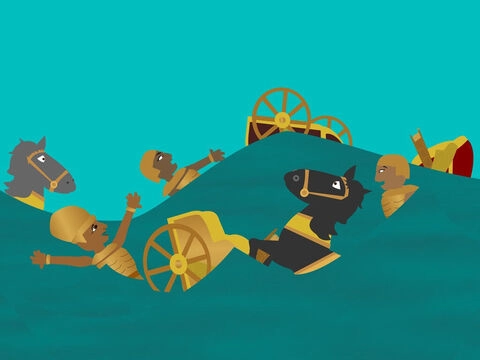
Then the LORD said to Moses, “Stretch out your hand over the sea so that the waters may come back over the Egyptians, over their chariots and their horsemen.” So Moses stretched out his hand over the sea, and the sea returned to its normal state at daybreak, while the Egyptians were fleeing right into it; then the LORD overthrew the Egyptians in the midst of the sea. The waters returned and covered the chariots and the horsemen, even Pharaoh’s entire army that had gone into the sea after them; not even one of them remained. But the sons of Israel walked on dry land through the midst of the sea, and the waters were like a wall to them on their right hand and on their left. Thus the LORD saved Israel that day from the hand of the Egyptians, and Israel saw the Egyptians dead on the seashore. Exodus 14:26-30 NASB
What about us?
God in His omniscience and sovereignty knew how Pharaoh’s story would end. Might the stubborn king have humbled himself before God with a different outcome to the story? Thankfully, God is big on giving people second chances, or in Pharaoh’s case, ten chances. Perhaps the better questions are:
- What is God asking from me?
- How many times have I steeled my heart against complying with His expectations?
- How far can I go in denying God before I, too, cross the line like Pharaoh?
Might be worth our time to bow before Him, pour out our hearts in prayer and ask Him to make clear the path we are to choose. The book of Proverbs includes this startling truth…
A man who hardens his neck after much reproof Will suddenly be broken beyond remedy.
Proverbs 29:1 NASB
Egyptian gods
The table provides a quick summary of the god under attack with each plague. This table shows up in many references on the web and in printed materials, and spellings may vary between those appearances.
| Nile turned to blood | Hapi (also called Apis), the bull god, god of the Nile; Isis, goddess of the Nile; Khnum, ram god, guardian of the Nile; others |
| Frogs | Heqet, goddess of birth, with a frog head |
| Gnats | Set, god of the desert storms |
| Flies | Re, a sun god; Uatchit, possibly represented by the fly |
| Death of livestock | Hathor, goddess with a cow head; Apis, the bull god, symbol of fertility |
| Boils | Sekhmet, goddess with power over disease; Sunu, the pestilence god; Isis, healing goddess |
| Hail | Nut, the sky goddess; Osiris, god of the crops and fertility; Set, god of the desert storms |
| Locusts | Nut, the sky goddess; Osiris, god of the crops and fertility |
| Darkness | Re, the sun god; Horus, a sun god; Nut, a sky goddess; Hathor, a sky goddess |
| Death of firstborn | Min, god of reproduction; Heqet, goddess who attended women at childbirth; Isis, goddess who protected children; Pharaoh’s firstborn son considered a god |
Source: https://zondervanacademic.com/blog/what-the-bible-tells-us-about-the-10-plagues-of-egypt Accessed 4_12_26
[1] Richards, Larry. Men of the Bible. Nashville: Thomas Nelson Publishers. 2003. p 279.
[2] Richards, Larry. Men of the Bible. Nashville: Thomas Nelson Publishers. 2003. p 282.
[3] Rawlings, Gertrude Burfurd. Pascal’s Thoughts on Religion. New York: The Peter Pauper Press. p 33.
[4] Richards, Larry. Men of the Bible. Nashville: Thomas Nelson Publishers. 2003. p 283.”
Sunday School Images courtesy of: Free Bible Images